Why It Works
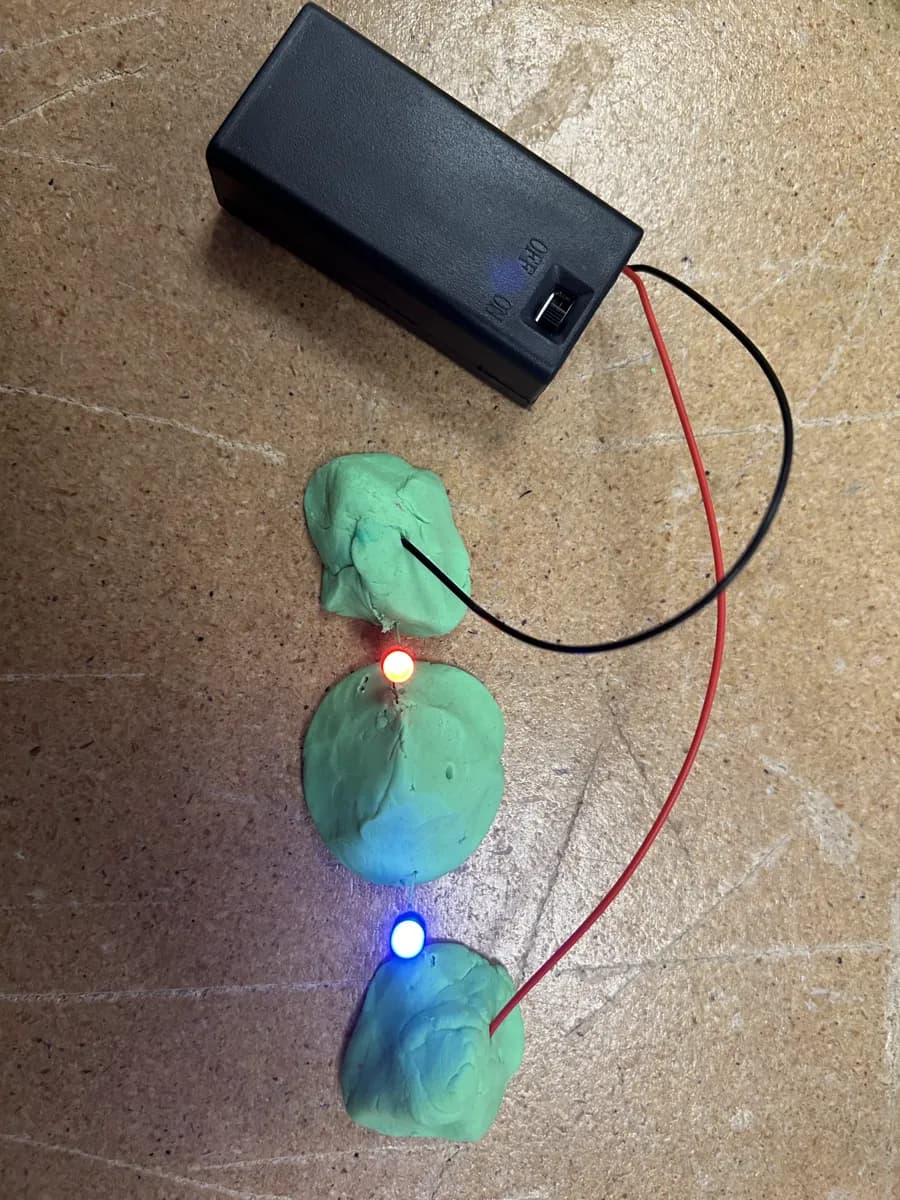
Play-Doh is salty, and salty dough conducts electricity. That means a blob of dough can act like a wire that kids can shape with their hands. Two blobs with an LED bridging them is a real circuit, and the moment it lights up is pure magic.
What Kids Learn
- Electricity flows in a loop called a circuit
- Some materials conduct electricity and some do not
- LEDs have a direction: the long leg is positive
- If the two blobs touch, the electricity takes the shortcut and the light goes out (a short circuit)
The Steps
- Roll two blobs of dough and keep a small gap between them.
- Push one battery pack wire into each blob.
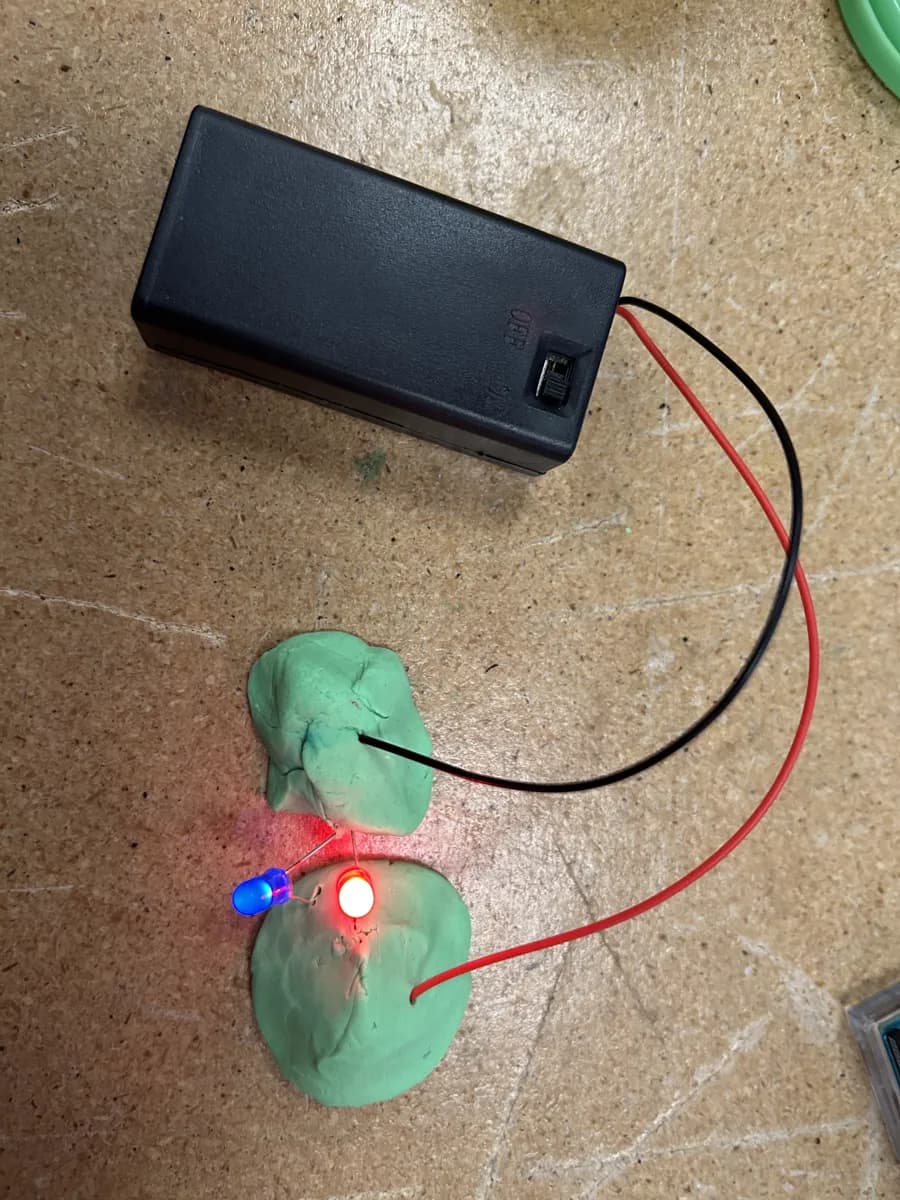
- Straddle an LED across the gap: long leg into the positive blob, short leg into the other.
- Watch it light up. Cheer loudly, this part is mandatory.
- Now experiment: add more LEDs, make the blobs into shapes, try connecting blobs with a dough bridge and see what happens.
What to Watch For
- Blobs touching each other: the LED goes dark because of the short circuit. This is a teaching moment, not a failure.
- LED in backwards: flip it, no harm done at these voltages.
- Dry dough conducts worse. Fresh squishy dough is happiest.
Going Further
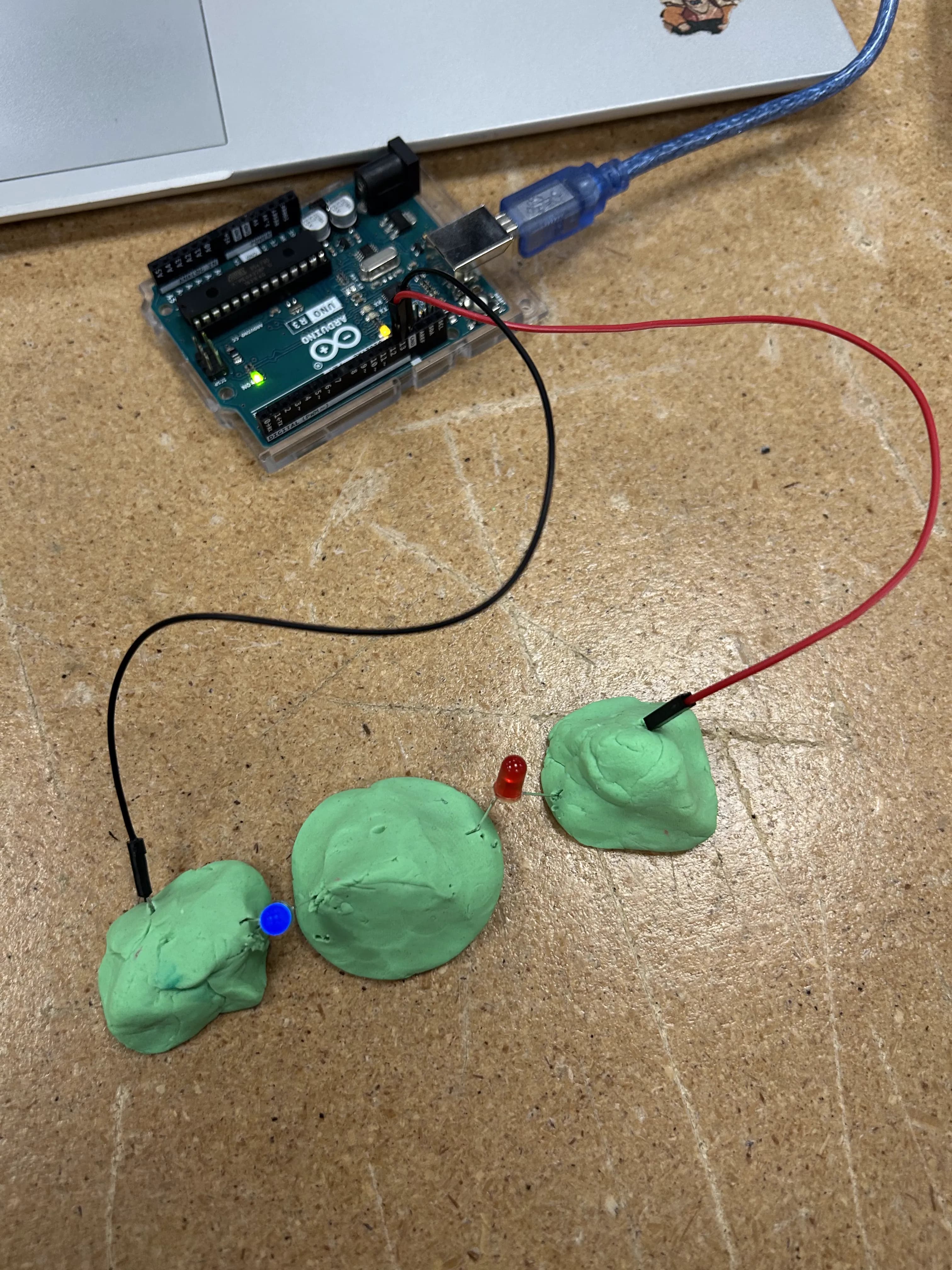
Older kids can swap the battery pack for an Arduino and make the LEDs blink with code, which is exactly how this activity grows into real programming. This is one of the activities behind Code with Chompers. Once the first LED works, show them the two ways to grow a circuit: